Case study · Venue modeling, loudspeaker coverage analysis, and ongoing production sound support
At Shakespeare in Delaware Park, the audience sits on a hill rising away from the stage. Consistent coverage depends on matching loudspeaker placement and aiming to the audience area. Our evaluation focused on how effectively the existing configuration served listeners across the hill and where adjustments could improve that coverage.
In 2024, we modeled the performance space and its existing sound system in L-Acoustics Soundvision. The analysis informed a revised loudspeaker configuration with more even predicted coverage, using equipment already available and avoiding a capital equipment purchase.
Evaluating the existing coverage
For a theatre production, coverage is about more than whether sound reaches a seat. Listeners need enough level and enough clarity to follow the dialogue. A system that sounds strong near the stage can still lose level and detail toward the back.
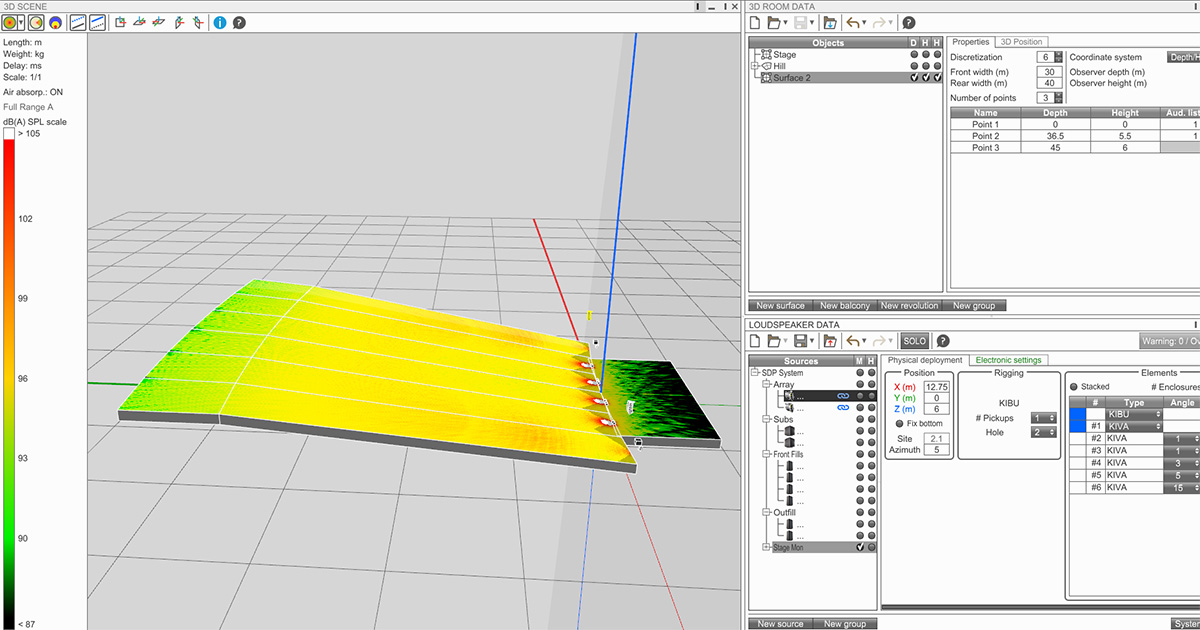
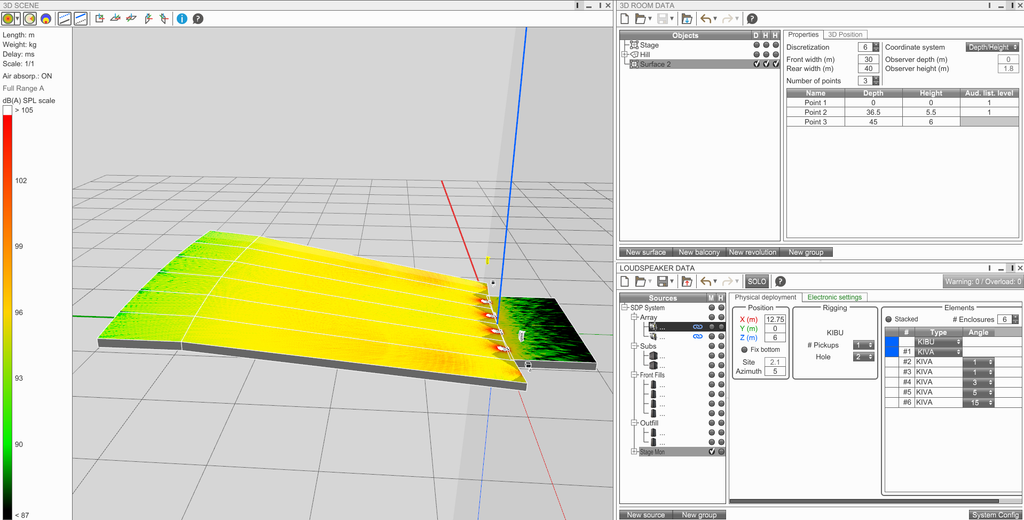
The documented loudspeaker configuration was recreated in the model to establish a starting point. It predicted front-to-back sound-level differences approaching 15 dB, with a pronounced decline beyond roughly the first third of the hill. That pattern was consistent with listening observations at the venue.
A difference of that size represents a substantial imbalance in level across the audience. Simply turning up the volume would make already-loud areas louder, compromising the experience for listeners in those areas. Instead, addressing the uneven coverage itself was necessary to provide a more consistent listening experience across the hill.
The analysis also identified uneven high-frequency response. These frequencies carry much of the consonant detail that helps listeners distinguish words, making their distribution especially relevant to spoken theatre.
Building a model of the space
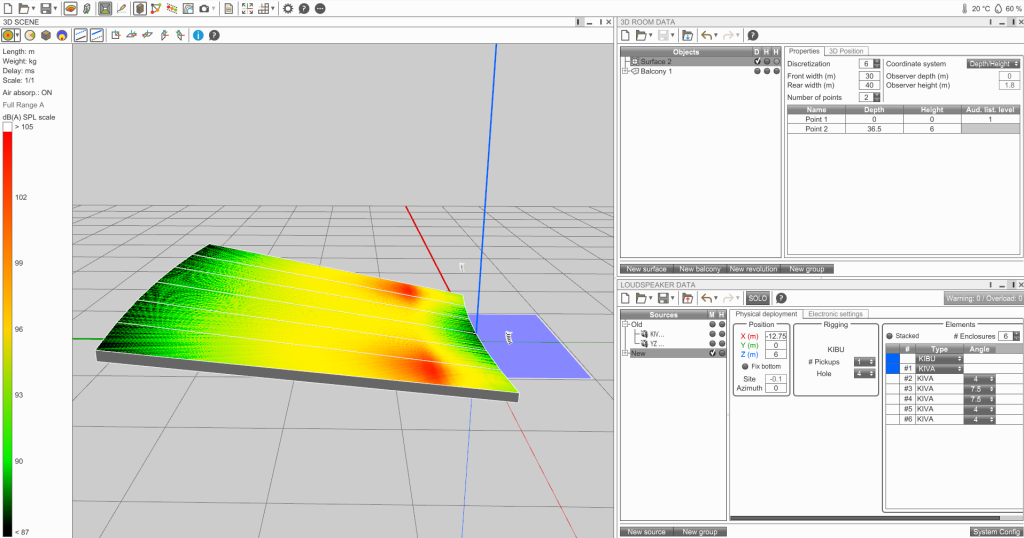
The Soundvision model incorporated the site dimensions, terrain, audience area, and existing loudspeaker positions. This allowed different configurations to be compared within the geometry of the venue.
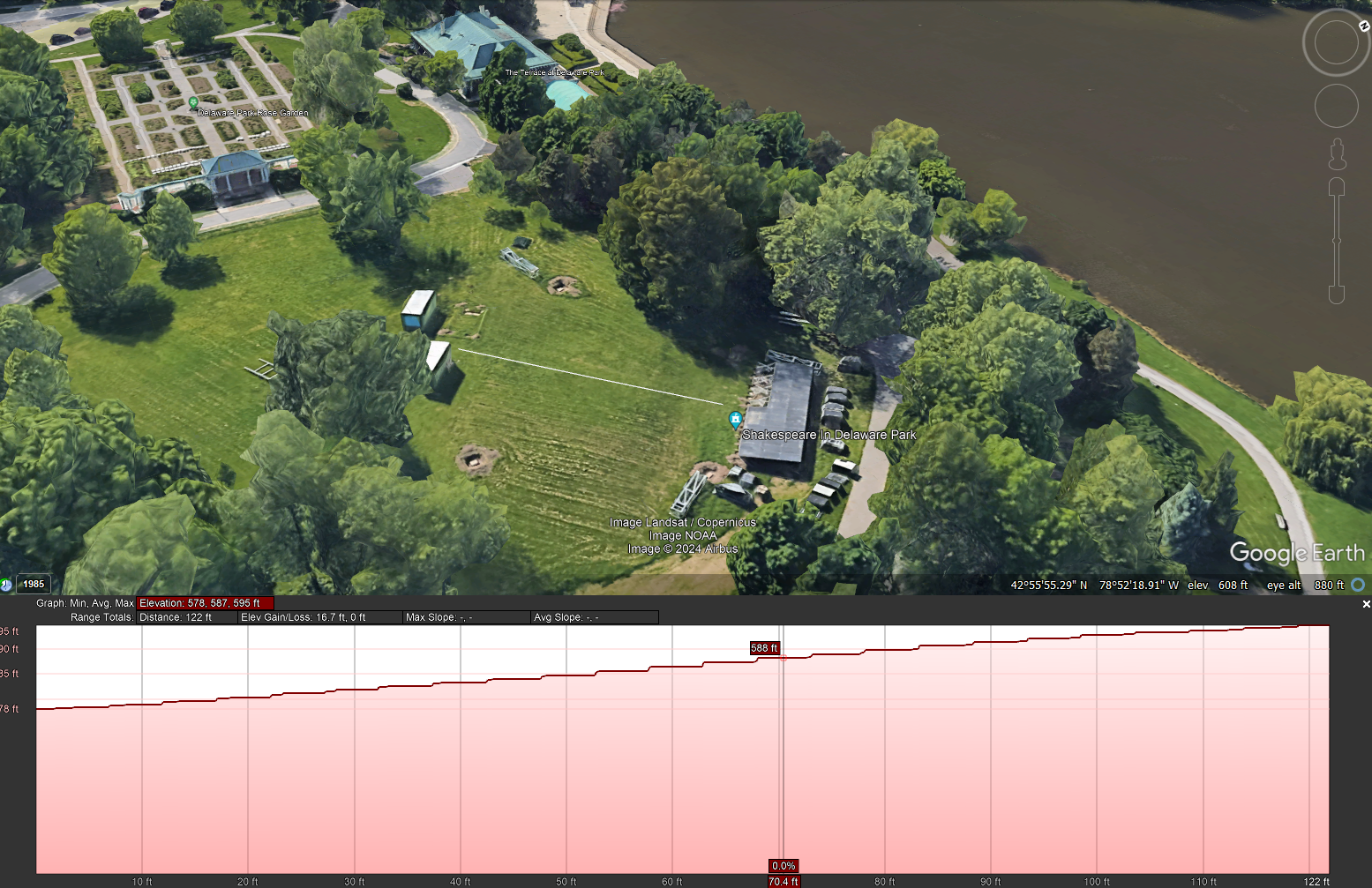
Google Earth measurements indicated approximately 120 feet from the loudspeaker towers to the top of the hill, with a rise of about 20 feet. Comparing the estimated tower height with its known dimensions provided a useful check on the scale of the model.
Soundvision predicts how a loudspeaker system distributes sound across an audience area. For this project, it provided a way to assess changes in aiming and configuration before making them on site.
Refining the array configuration
The main loudspeakers are arranged in line arrays: vertical groups of loudspeaker cabinets designed to work together. The overall tilt and the angles between cabinets help shape their vertical coverage. Changing those angles affects both the distribution of sound level and the balance of frequencies listeners receive.
The work focused on adjusting the angles between cabinets and comparing the resulting coverage. The aim was to distribute sound more evenly along the hill within the limits of the existing equipment and mounting arrangement.
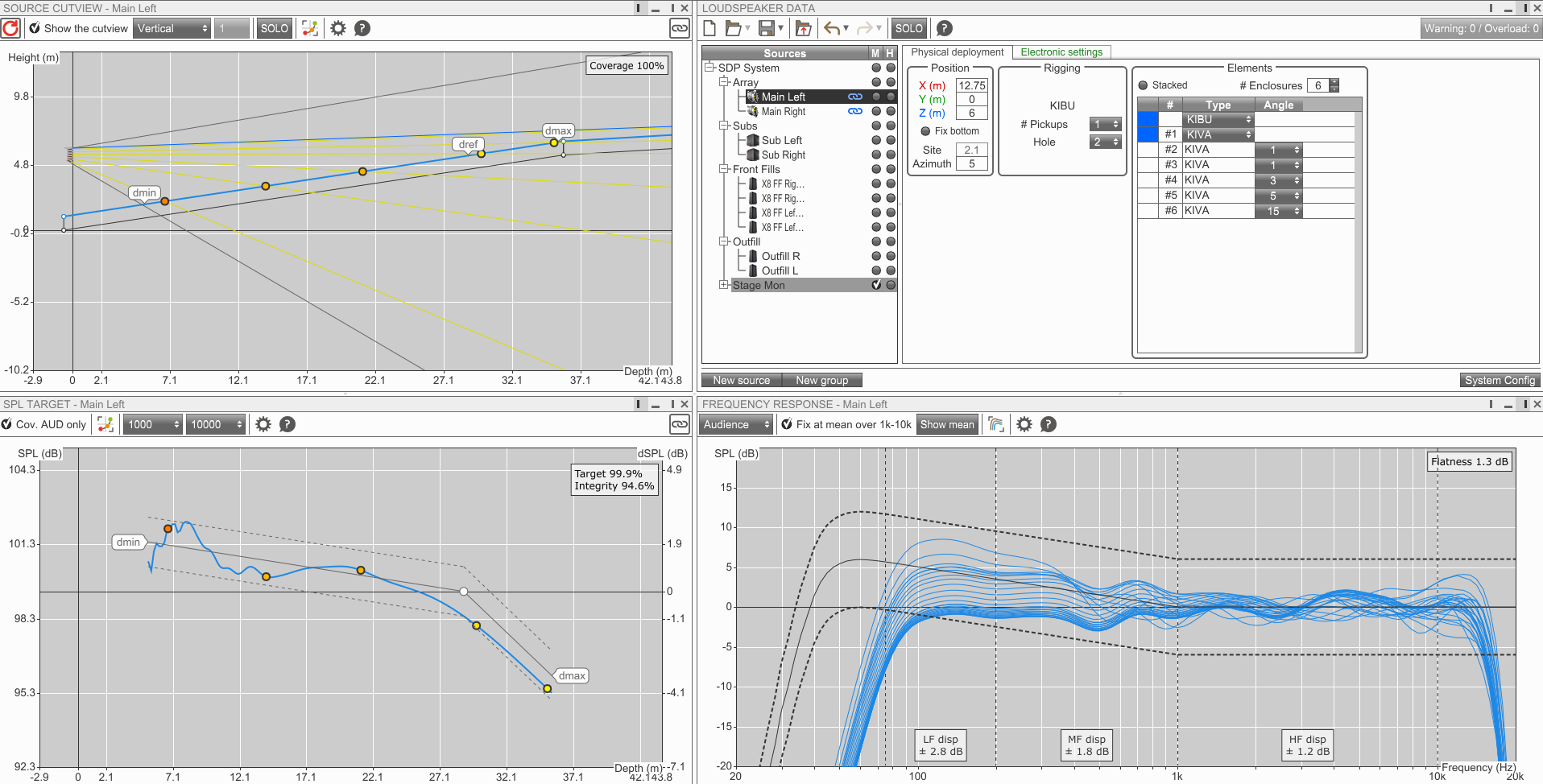
The revised configuration showed more even predicted coverage than the documented starting arrangement and informed the updated deployment. Existing front-fill loudspeakers were included in the complete-system model to account for listeners nearest the stage.
Working within the tower-height constraint
The modeling also highlighted a limitation of the existing tower height and aiming options. The upper part of the arrays was approximately level with the top of the audience hill, and adjustments within the existing setup could only partially address the uneven coverage.
A taller-tower configuration was explored in the model and showed more even predicted coverage across the hill. However, raising the arrays would have required tower extensions and changes to the existing lighting fixture positions. The cost and disruption to the lighting arrangement made this option impractical for the project.
This helped distinguish the improvements available through configuration from those that would require changes to the supporting infrastructure.
The outcome
The project established a venue model, compared the documented and revised loudspeaker configurations, and guided changes using the existing system. The revised model showed a more even distribution of sound, while the analysis made the remaining coverage constraints clearer.
The value was practical: a better-informed deployment without purchasing replacement loudspeakers, along with a clearer basis for evaluating future changes.
Ongoing production sound support
Our work with Shakespeare in Delaware Park extends beyond the 2024 system evaluation. We provide ongoing production sound support, including system preparation, troubleshooting, and adjustments through rehearsals and performances.
That continuing work connects the system design with the needs of each production. Modeling helps establish how the equipment should serve the space; listening and adjustments during production help put that design into practice.
For venues considering improvements, this project demonstrates the value of evaluating how an existing system is configured. Understanding the relationship between the loudspeakers and the audience can reveal useful changes before replacement equipment becomes the priority.