PARTERRE SOUND · ABOUT
Creative sound, carefully engineered.
Parterre Sound brings a theatrical perspective and a technical approach to sound design, production sound support, audio systems, and location recording.
A considered approach to the performance, the room, and the people listening.
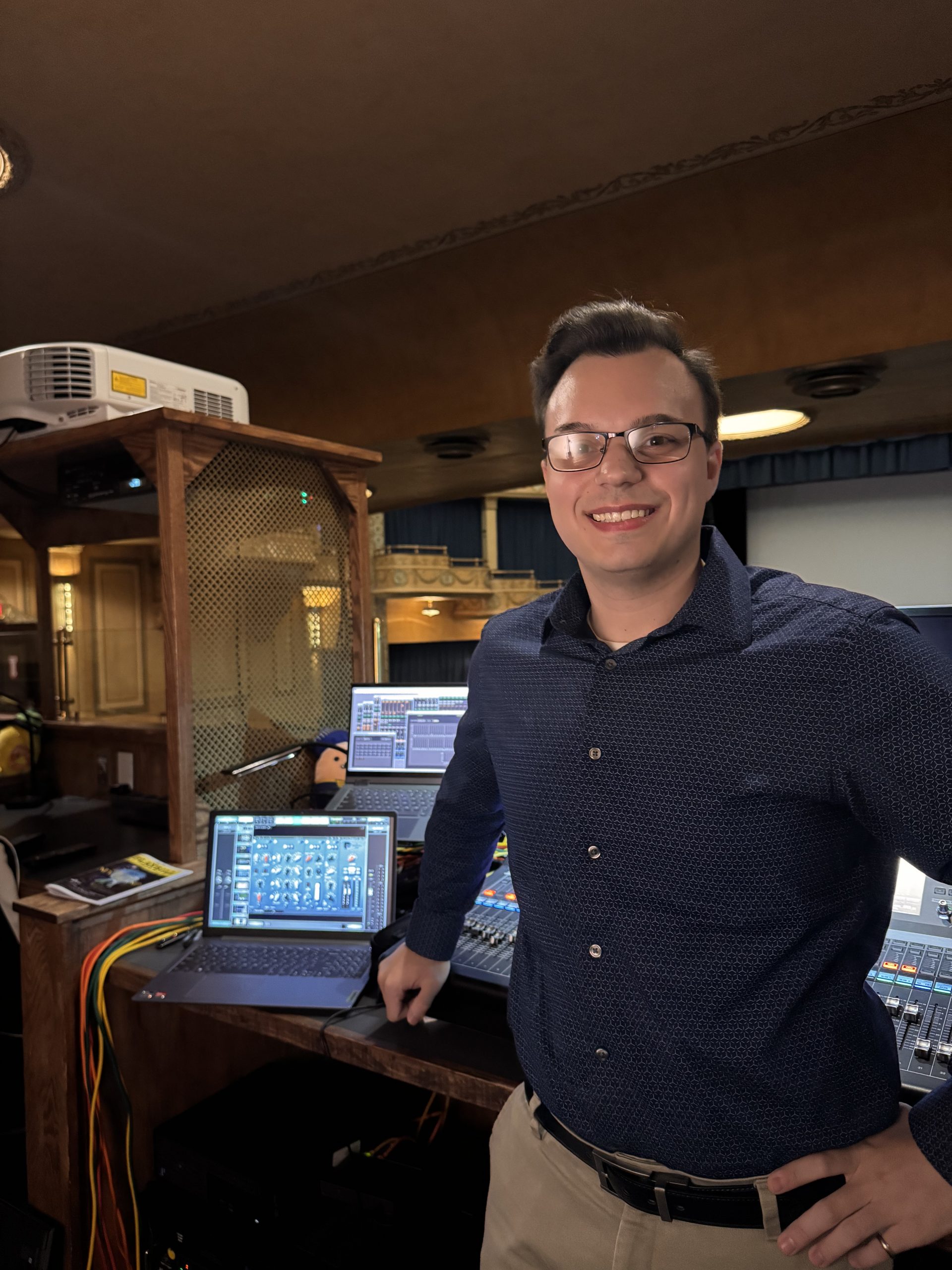
Mitchell Sulkowski
Sound Designer & Audio Consultant
With a background in theatrical sound and a B.S. in Software Engineering from Rochester Institute of Technology, Mitch brings both creative and technical perspectives to his work. His experience spans theatrical sound design, audio system optimization, live-performance recording, and production support.
His approach combines careful listening, technical analysis, and practical problem-solving. Whether designing sound for a production or improving an existing venue system, the focus is on delivering a consistent experience for audiences while making equipment reliable and straightforward for the people operating it.
His theatrical work includes ongoing production sound support for Shakespeare in Delaware Park. Previous projects have included sound design and mixing for student-led productions at Columbia University and the Lenfest Center for the Arts. He also collaborates with production teams and provides hands-on guidance to those developing their skills in technical theatre.
Additional project experience: SUNY Niagara, Starring Buffalo, the Historic Palace Theatre in Lockport, and D’Youville University’s Kavinoky Theatre.
01 · DESIGN PHILOSOPHY
Sound in service of the performance.
Sound design begins with the performance. Parterre Sound’s approach is to convey its meaning, emotion, and subtle detail to the audience, preserving the intimacy of dialogue and the energy of music. Every decision should support the story and strengthen the audience’s connection to the stage.
That creative work depends on understanding how sound behaves in the space. Room acoustics, loudspeaker coverage, system alignment, and mix balance all shape what the audience hears. Careful design brings these elements together so the technical system supports the performance naturally.
The same attention carries through to system optimization and recording: understand the intent, identify what stands in its way, and make practical improvements that preserve clarity and detail.
02 · WORKING PRACTICE
A practical way of working.
01
Listen first.
Understand what the production and its operators need. Listen in the audience area and establish what is working before changing it.
02
Evaluate the space.
Use inspection, measurement, and modeling to understand the space, evaluate coverage, and guide practical changes.
03
Make it usable.
Simplify routing, build practical showfiles, and explain the changes. Hands-on guidance helps venue staff and student operators understand the equipment and use it during their shows.
Based in Western New York.
Working with theatres, schools, colleges, performance venues, and recording clients across the region. Projects outside the region are welcome by arrangement.
Each project starts with a conversation about your goals, schedule, and the support you need.